ServicesRoof Inspections
Roof Inspections in Plainfield, IN
We get up on the roof, look closely and tell you plainly what shape it's in. You get photos and a written summary of what we found, what can wait and what can't, so any next step is your choice and nothing is hidden.
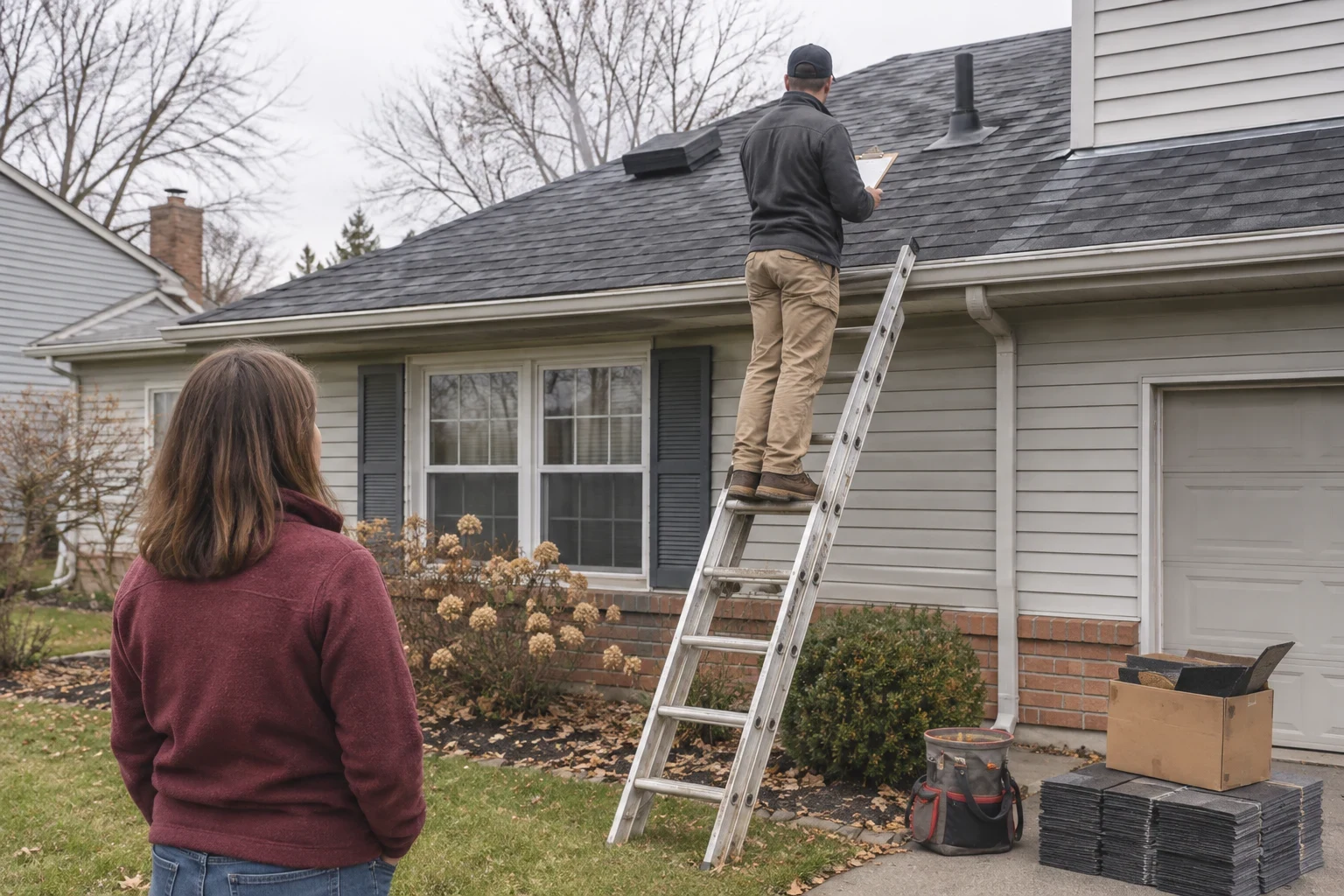
An honest look before you spend anything
A roof inspection is the simplest way to find out whether you have a real problem, a small fix or a roof nearing the end of its life. We check the shingles or metal panels, the flashing, the vents and pipe boots, the gutters and, when we can get to it, the attic underneath. Most trouble starts small and out of sight, and this is where we catch it.
Winters here are hard on roofs. Water slips under a lifted shingle, freezes and pries it a little further each cycle, so a look before or after the cold months can save you from a much bigger repair.
When we finish, you get our findings on paper along with the photos. If something needs work, we explain the scope and what drives the price before anything is scheduled. If the roof is fine, we tell you that too.
What we check on your roof
- Shingles and panels
- Where it's safe to walk, we go over the roof for shingles that are cracked, curled or gone, bare spots where granules have worn away, and bruises from hail. Metal panels get checked for dents and loose fasteners, and on flatter sections we study TPO seams and any areas where water pools.
- Flashing, vents and pipe boots
- Leaks tend to start around chimneys, skylights, wall joints and plumbing vents. We make sure the metal flashing still sits tight and its seal hasn't cracked. We also look closely at the rubber collars on pipe vents, since they often split years before the shingles around them wear out.
- Gutters and downspouts
- When gutters fill with debris or pull away from the fascia, rainwater can back up beneath the first row of shingles. We look for failing hangers, sections that dip and hold water, and downspouts that empty right against your foundation.
- Attic and roof deck
- Inside the attic we look for stained boards, wet insulation, pinholes of daylight and venting trouble such as frost or mildew on the deck's underside. Up top, any section that feels soft under our feet tells us the wood below may be compromised.
- Photos and plain-language findings
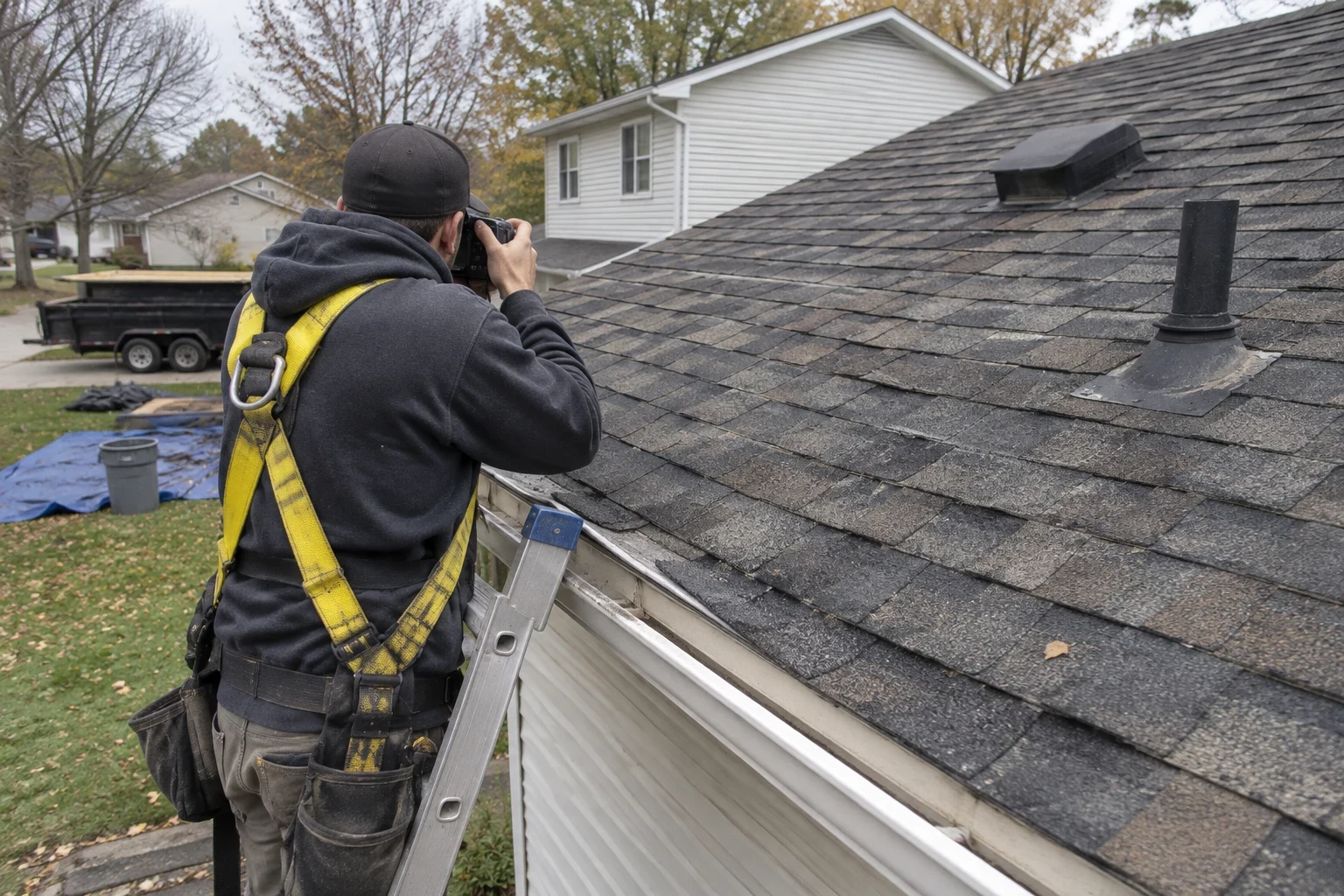
- Each issue we note is paired with a picture and a short, plain explanation. We separate what needs action soon from what simply needs watching, so you can make plans with real information.
When your roof is due for a checkup
Brown marks on the ceiling
A discolored patch, even a faint one, tells you moisture is finding a way inside. The actual opening in the roof is frequently a few feet away from the spot you see indoors.
A hail or wind storm just passed
Storm damage often can't be seen from your yard. Having the roof checked shortly after captures the damage while it's recent, which is useful if you choose to file an insurance claim.
Grit piling up at the downspouts
Sandy granules washing out of your gutters mean the shingles are losing their protective coating. That makes them age faster and deserves a closer look.
Your roof is 15 years or older
Plenty of asphalt roofs begin to wear noticeably around this age. Learning its condition now lets you set money aside for repair or replacement when it suits you.
Thick icicles at the eaves
Heavy ice along the roof edge usually means warm air is leaking out of the attic. Meltwater trapped behind that ice can creep up beneath the shingles.
You're buying or selling a home
A roof report with photos gives buyer and seller real facts to discuss rather than assumptions.
What affects the cost of any work we find
The inspection itself is free. If something needs fixing, the price depends on what is actually wrong, and we put those factors in writing before you agree to anything. These are the things that usually move the number.
Size of the problem
A cracked pipe boot is a quick fix. Worn shingles across several slopes or widespread hail damage is a much bigger job, and possibly a roof replacement.
Condition of the decking
If water has softened the wood underneath, those boards need replacing. We note suspected soft spots during the inspection so they aren't a surprise later.
Roof pitch and access
Steep slopes, second stories and tight spaces around your home take more time and more safety gear.
Materials involved
Matching existing shingles, working with metal panels or patching a TPO membrane each carry different material and labor costs.
Insurance involvement
For storm damage, your policy may cover part of the work. We work with homeowners and insurance companies on storm damage claims and share what we documented, but your adjuster makes the coverage decision.
What happens during your inspection
- 1
You call and we book a visit
Let us know anything you've spotted, or simply that you want a checkup, and we'll find a day that works for you. We'll also ask how to reach the attic so we can inspect it too.
- 2
We start low and work up
Gutters and roof edges come first. Then we climb up and go over each slope one at a time, taking a photo of every concern the moment we spot it.
- 3
We look inside the attic
If you're comfortable with it, we check the underside of the deck, the insulation and the airflow. Slow leaks often leave their first traces up there.
- 4
We go over the results with you
Once we're down, we sit with you, pull up the pictures and talk through every item in everyday language. You keep a copy of our findings, plus our honest view on whether a repair or a replacement is the better choice.
- 5
The next step is yours
If your roof needs work, our written quote lays out the scope and what affects the price before any work begins, and nothing gets tacked on afterward. Financing is available if it makes the project easier.
Questions about roof inspections
Is the roof inspection really free?
Yes. We don't charge to inspect your roof, and you owe us nothing afterward. We would rather you understand your roof's condition and reach out when the timing is right for you than feel rushed.
How much time should I set aside?
Plan on roughly an hour for a typical house. A big or steep roof stretches that out a little, and so does a trip into the attic. When we book the visit, we'll let you know what to expect for your home.
Do I need to be home?
It's better if you are. We can check the exterior on our own, but the attic requires someone to let us inside. You'll also be able to see the photos with us and ask whatever is on your mind right then.
Can an inspection help with a hail damage claim?
It can. The photos and notes we leave you document the damage clearly, so you have something solid to share with your insurance company. We work with homeowners and insurance companies on storm damage claims, but the adjuster is the one who decides coverage. You can read more on our Storm Damage Repair page.
What if you don't find anything wrong?
Then that's exactly what we'll tell you, and the photos of a sound roof go into your files. We never make up a repair just to justify a trip out.
When should I schedule my next inspection?
Once a year keeps small problems from growing, and it's worth adding a visit after any major storm. Two seasons work especially well: late fall, before the snow comes, and spring, after the last of the freeze and thaw.
Find out where your roof stands
One phone call gets you a free inspection, clear photos and a written summary of what we found. What you do after that is entirely up to you.