ServicesTPO Roofing
TPO Roofing in Plainfield, IN
Shingles struggle on nearly flat roofs. A TPO membrane gives your porch, addition or garage one continuous, heat-welded surface that keeps water out. We inspect first, then hand you a written quote that lists exactly what we'll do.
A better fit for the low parts of your roof
TPO is a single-ply roofing membrane, usually white or light gray, made for roofs with very little slope. On a house that often means a rear addition, a porch roof, an attached garage or a low section tucked between two steeper roofs. Shingles rely on pitch to shed water. On a low slope, water moves slowly, backs up under the tabs and finds its way inside.
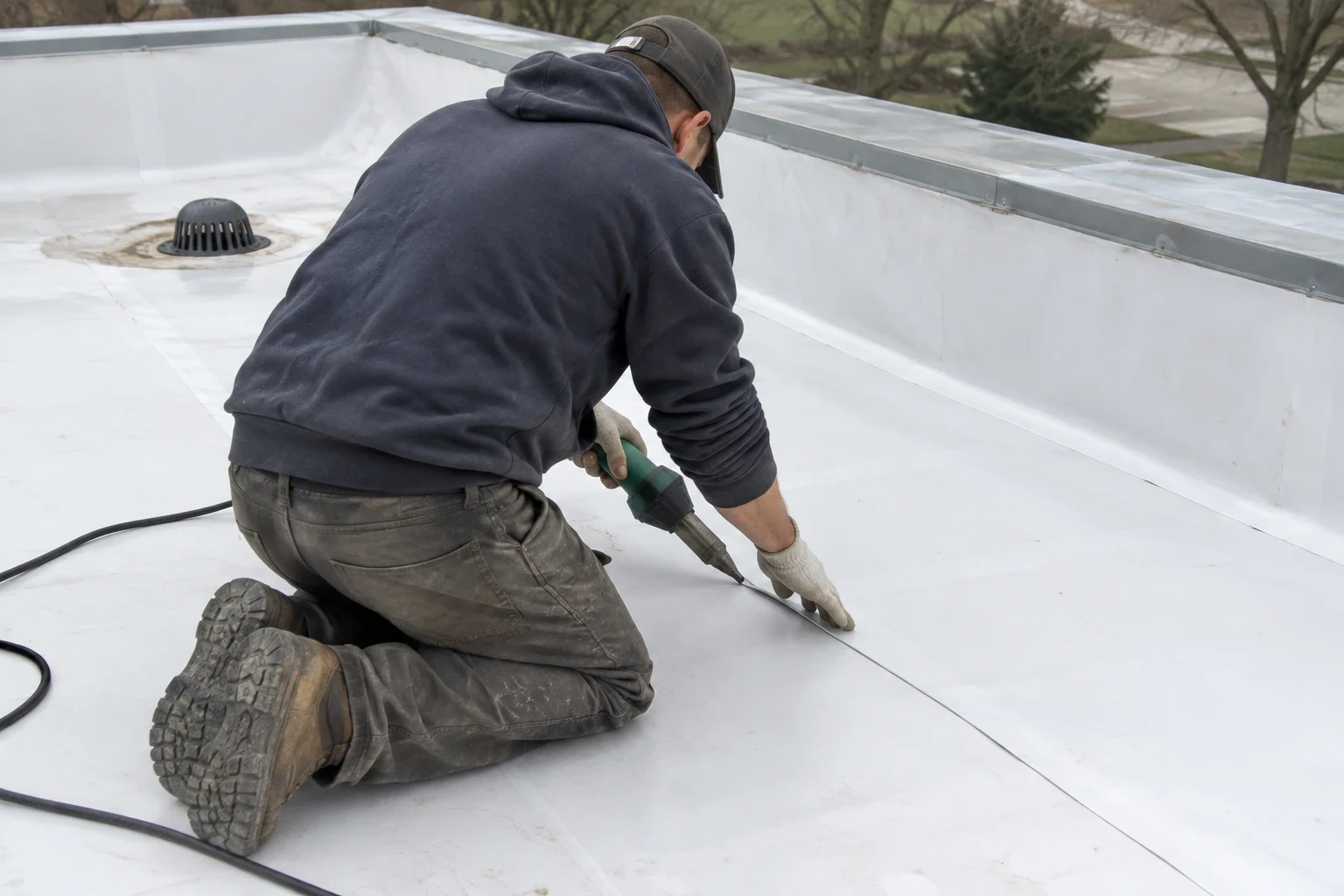
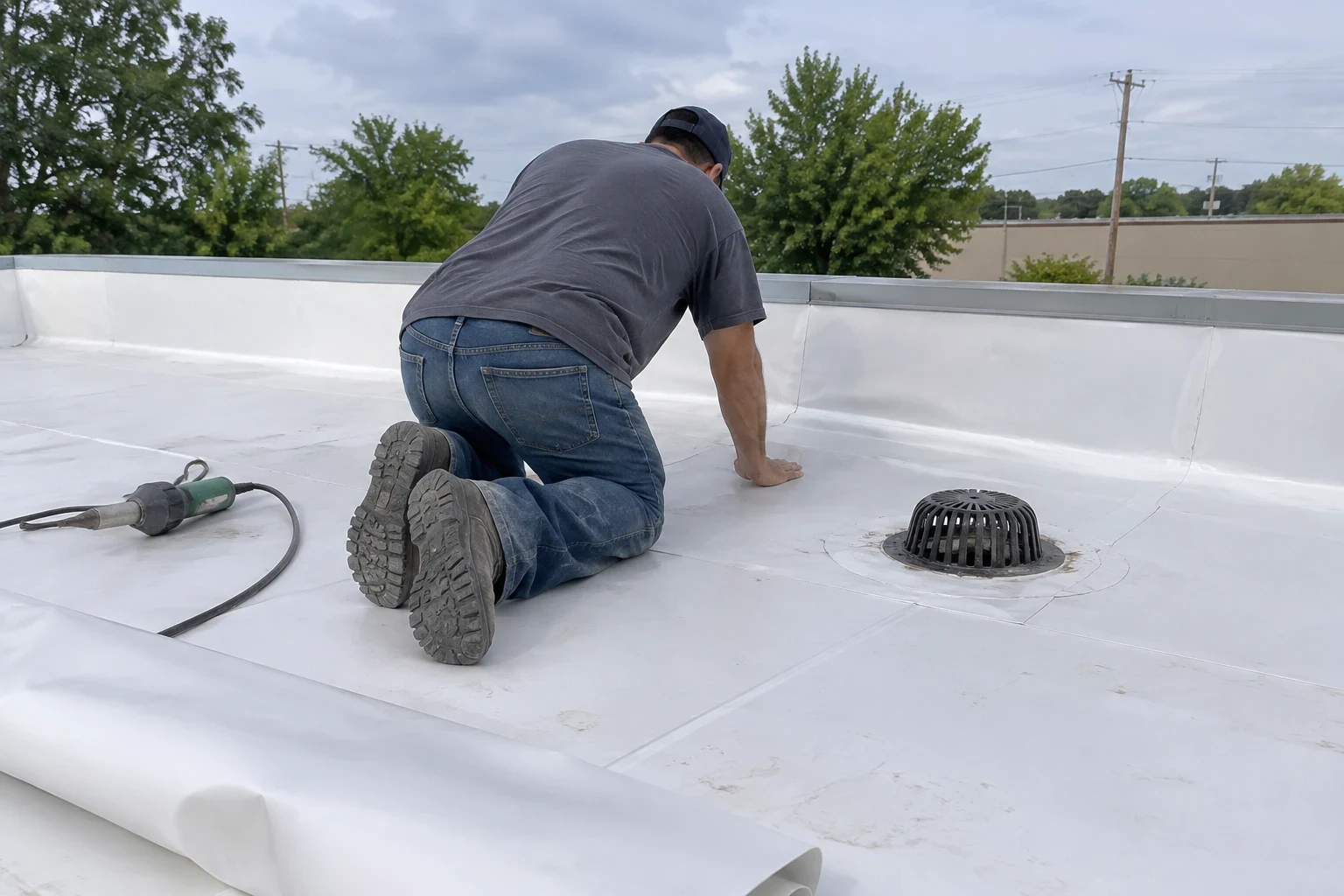
A TPO roof is installed in wide sheets, and the overlapping seams are welded together with hot air so they become one piece. That leaves far fewer places for water to get through than rolled roofing or shingles laid too flat.
We install new TPO and repair existing membranes. Once we've looked at your roof, we'll tell you plainly whether a repair will hold or a new membrane makes more sense. Before work starts, you get a written estimate covering the membrane, the tear-off, any deck or insulation work and how the edges are finished. If something isn't on that paper, it doesn't show up on your bill later.
What a TPO roof from us includes
- Tear-off or recover decision
- We check how many layers are already up there and whether the old roof is dry. Sometimes TPO can go over one existing layer. If it can't, we explain why, and the tear-off is spelled out in writing.
- Deck and insulation check
- Soft or rotted decking gets found before the membrane goes down, not after. If boards or insulation need replacing, you'll see photos and the quantity in writing.
- Heat-welded seams
- A hot-air welder fuses each overlap into a solid seam. After the seams cool, we probe every one by hand to catch any gaps.
- Flashing at walls and pipes
- Most leaks on low roofs start where the roof meets the wall of your home or wraps around a vent pipe or skylight. We flash these spots with membrane and metal so they stay sealed as the house moves through the seasons.
- Edges and drainage
- We finish edges with metal drip edge or termination bar and make sure water has a clear path off the roof. If the low roof drains into gutters, we check that they can handle the flow and mention it if our Gutters service would help.
Signs your low roof is ready for TPO
Water that sits for days
A little standing water after rain is normal on a flat roof. Puddles still there two days later point to sagging decking or poor drainage, and they wear out the old surface quickly.
Stains on a porch or addition ceiling
Brown rings or peeling paint under a low section usually mean water has been getting in for a while. The sooner it's found, the less decking has to be replaced.
Cracked or blistered rolled roofing
Old rolled roofing and tar coatings dry out, crack and bubble. Once that starts, patches tend to buy only a season or two.
Shingles on a slope that's too flat
If a previous owner shingled a nearly flat porch or addition, leaks around the edges and lifted tabs are common. TPO is the right material for that pitch.
Seams or edges pulling loose
On older membranes, seams can separate and edges can shrink back. Freeze-thaw cycles through an Indiana winter push water into those openings and widen them.
What moves the price of a TPO roof
Every TPO estimate we write breaks the price into its parts, so you can see where the money goes. The biggest swings come from what's under the old roof, which is why we inspect before pricing anything. Financing is available if you'd like to spread out the cost.
Size and shape
A simple rectangle over a garage goes faster than a low roof with corners, curbs and several pipes to flash around.
Layers coming off
Removing one old layer is quicker than removing two or three. Recovering, when the roof qualifies, skips most of that labor.
Condition of the deck
Wet insulation or soft plywood has to be replaced. We write down the expected amount up front and show you photos if more turns up once the old roof is off.
Membrane thickness and insulation
Thicker membranes cost more and hold up longer. Adding insulation board, or tapered board to fix ponding, adds material but can solve a drainage problem for good.
How a TPO job runs, start to finish
- 1
Free inspection and photos
We walk the low roof, check the decking from above and look at the ceiling below if there's a stain. You get photos of what we found and an honest repair-or-replace answer.
- 2
Your written quote
It lists square footage, tear-off, membrane thickness, any deck or insulation work and every flashing detail. Take your time with it, and ask us about any line that isn't clear. Nothing gets scheduled until you've said yes.
- 3
Installation day
We cover your landscaping and the walls below the work area, remove the old roof and make the deck repairs listed in your estimate. Then insulation board goes down, the membrane is fastened and the seams are welded. Most of the work happens outside, so you rarely need to be home all day.
- 4
Seam check, cleanup and walkthrough
We probe every seam, haul away the old material and sweep the lawn and driveway for stray fasteners. Before we leave, we walk you around the finished roof and point out where the water goes.
TPO roofing questions we hear often
Should my porch or addition have TPO or shingles?
It comes down to pitch. Below roughly 2 in 12, shingles can't shed water reliably, and a membrane like TPO is the better choice. Above that, shingles usually work fine and match the rest of your home. We'll measure the slope and tell you which makes sense.
Can TPO go over my existing flat roof?
Sometimes. If there's only one layer and the deck underneath is dry and solid, a recover can work. If there's trapped moisture or more than one layer, it has to come off. Either way, we'll put the reason in writing.
How does TPO hold up to cold winters and hot summers?
TPO stays flexible in the cold, and its welded seams don't rely on glue that can let go. The light color reflects summer sun, which can keep a room under the roof noticeably cooler. Good drainage matters most, so we make sure water doesn't sit and freeze.
Is storm damage to my TPO roof something insurance covers?
That depends on your policy and what caused the damage. We work with homeowners and insurance companies on storm damage claims, documenting what we find with photos and explaining the process. Our Storm Damage Repair page covers how that works.
How long does installation take?
A porch or garage roof is often finished in a day. Larger low roofs or ones with a lot of deck repair can take longer, and we won't weld seams in rain. We'll give you a realistic timeline for your roof in writing.
Find out what your low roof needs
We'll inspect it, show you photos and write down exactly what we recommend and why. You decide from there, with the full scope in front of you.