ServicesShingle Roofing
Shingle Roofing in Plainfield, IN
We install asphalt shingle roofs that are built to shed water, breathe properly and hold up for years. Before anything is torn off, you get a written quote showing the scope, the materials and what could change the price, so you know exactly what you're paying for.
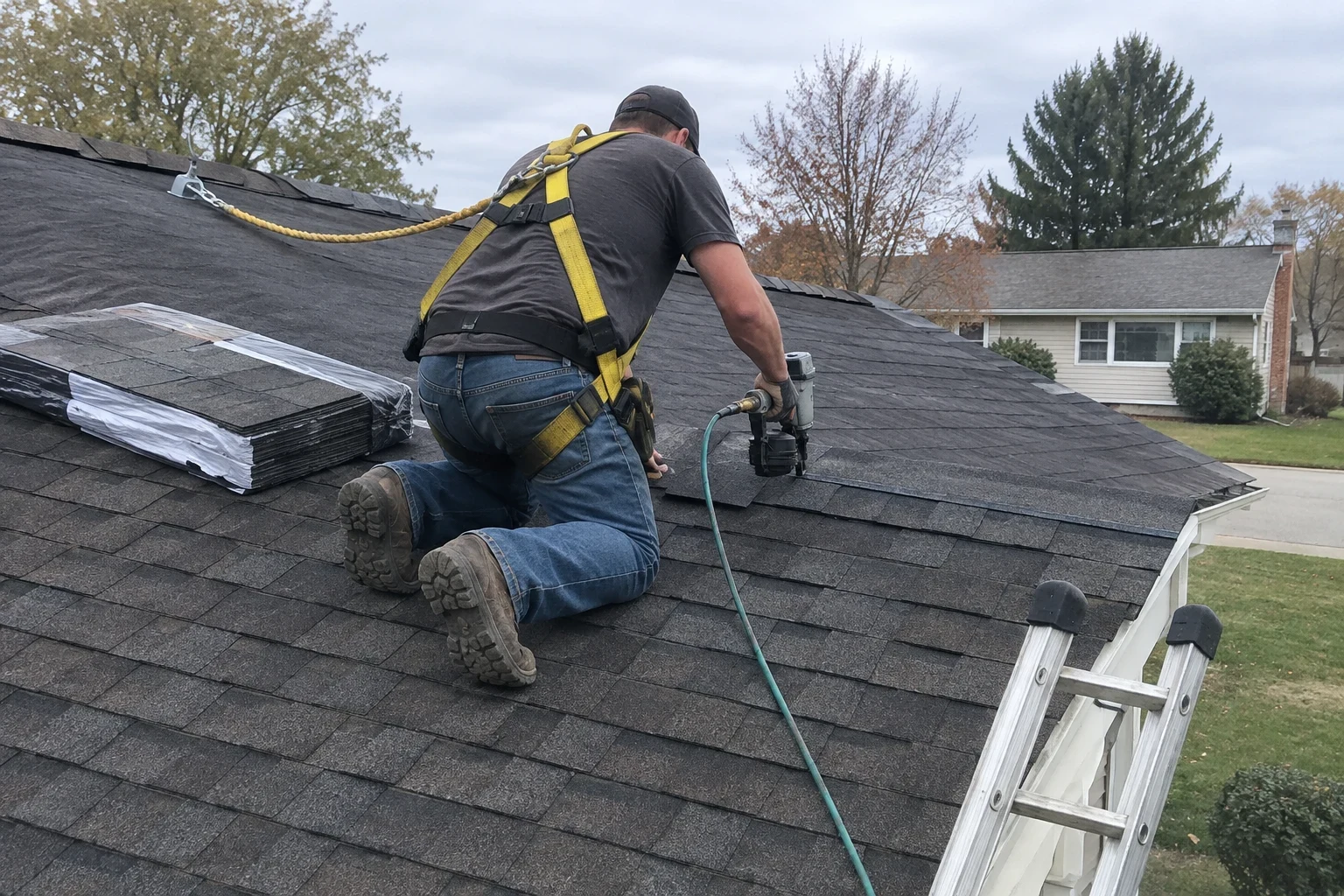
A shingle roof done right, from the deck up
Asphalt shingles cover most homes around here for good reason. They are affordable, they come in plenty of colors and styles, and a crew that knows them can install them cleanly. The shingles you see are only the top layer, though. What keeps water out is the system underneath: the decking, the underlayment, the flashing at every wall and chimney, and the vents that let heat and moisture escape.
Most shingle problems we find come from shortcuts in that hidden layer, like reused flashing or a missing ice barrier at the eaves. We walk your roof, tell you what we see, and put the full scope in writing. If a repair will do the job, we'll say so and point you to our roof repair service instead.
What your shingle roof includes
Tear-off to the decking
Every old shingle and every scrap of worn felt comes off until the bare wood deck is exposed. If any boards are soft or rotted, we take pictures and walk you through them before a single piece is replaced.
Ice and water barrier
Self-sealing membrane goes along the eaves, in valleys and around penetrations. When snow melts and refreezes at the edge of the roof, this layer keeps backed-up water from reaching your ceilings.
Synthetic underlayment
The rest of the deck gets a synthetic underlayment that resists tearing and stays flat under the shingles.
New flashing and drip edge
Step flashing, chimney flashing, pipe boots and drip edge are replaced, not reused. These are the spots where most leaks start.
Ventilation that matches your attic
Fresh air should enter low along the soffits and leave high at the ridge, in roughly equal amounts. We size both openings so your attic stays cooler in summer and doesn't collect frost in winter.
Cleanup and a magnet sweep
Tarps protect your landscaping during tear-off, and we sweep the yard and driveway with magnets for stray nails before we leave.
Signs your shingles are ready to go
Edges that lift or dip
When corners turn up or the middle of a shingle sinks, the asphalt has dried out and gone stiff. From there, wind can pry it loose with little effort.
Granules in the gutters
Piles of sandy grit in your gutters or at the downspouts tell you the shingles are shedding their coating. Once that grit is gone, sunlight bakes the bare asphalt and it ages fast.
Bald, cracked or missing pieces
A few missing shingles after a storm can be repaired. Widespread cracking usually means the roof has reached the end of its life.
Stains on ceilings or attic wood
Water marks inside often trace back to failed flashing or underlayment. We follow the stain to its source before recommending anything.
Icicles and ice ridges every winter
Thick ice along the eaves points to heat escaping into the roof. New shingles alone won't fix that, so we look at insulation and ventilation too.
How your shingle job runs
- 1
Free inspection and photos
We go up on the roof, look in the attic with your permission, and photograph everything worth noting. You see the same pictures we do.
- 2
Your written quote
It lists each item on its own line: tear-off, decking allowance, underlayment, flashing, vents, shingle line and color, and cleanup. If something could change the price, like hidden rot, it spells out how that will be handled and priced before we start.
- 3
Install day
Most homes are torn off and re-roofed in a day or two, depending on size and weather. We keep the work area tidy, cover what needs covering, and tell you if we find anything unexpected before acting on it.
- 4
Final walk-through
We review the finished roof with you, check that the gutters are clear of debris, and do a last sweep for nails.
What moves the price of a shingle roof
No two roofs are priced the same, so we look at yours before we put a number on it. Each factor below gets its own line in your written quote, which means nothing shows up later as an add-on you never agreed to. If you'd like to spread the cost over time, financing is available.
- Roof size and pitch
- A bigger roof takes more bundles of shingles and more hours to cover. On a steep slope, the crew works tied off with extra safety equipment, and that slows the pace.
- Layers to remove
- Two old layers stacked on top of each other take longer to strip and fill more of the dumpster, which raises disposal costs.
- Decking condition
- Boards that are rotted or coming apart need to be swapped out. Your estimate states the cost per replacement sheet up front, so a few extra bad boards are simple math, not a surprise.
- Shingle line and details
- Architectural shingles run higher than basic three-tab. Chimneys, skylights and valleys each call for extra flashing work.
Shingle roofing questions
Something not covered here? (317) 836-2912
Can you put new shingles over my old ones?
Sometimes code allows a second layer, but we rarely recommend it. Laying new shingles over old ones buries the wood where nobody can check it, holds in heat and puts extra load on the framing. Stripping down to the deck lets us repair what's underneath and gives the new shingles a flat base to seal to.
Architectural or three-tab shingles?
Architectural shingles are thicker, look more dimensional and generally handle wind better. Three-tab costs less up front. We'll explain the difference for your home and put both options in your estimate if you want to compare them.
What happens if you find rotten wood during tear-off?
We stop, take photos and show you. Your estimate already lists the price for each sheet of decking, so the extra cost is clear before we replace anything.
Is shingle or metal roofing better for my home?
Both work well here. Shingles cost less to install and are easier to repair, while metal roofing lasts longer and sheds snow quickly. We're happy to talk through both during your inspection.
Can hail damage be covered by my insurance?
It often can. We work with homeowners and insurance companies on storm damage claims, documenting the damage with photos so you have what you need. Our storm damage repair page explains how that process goes.
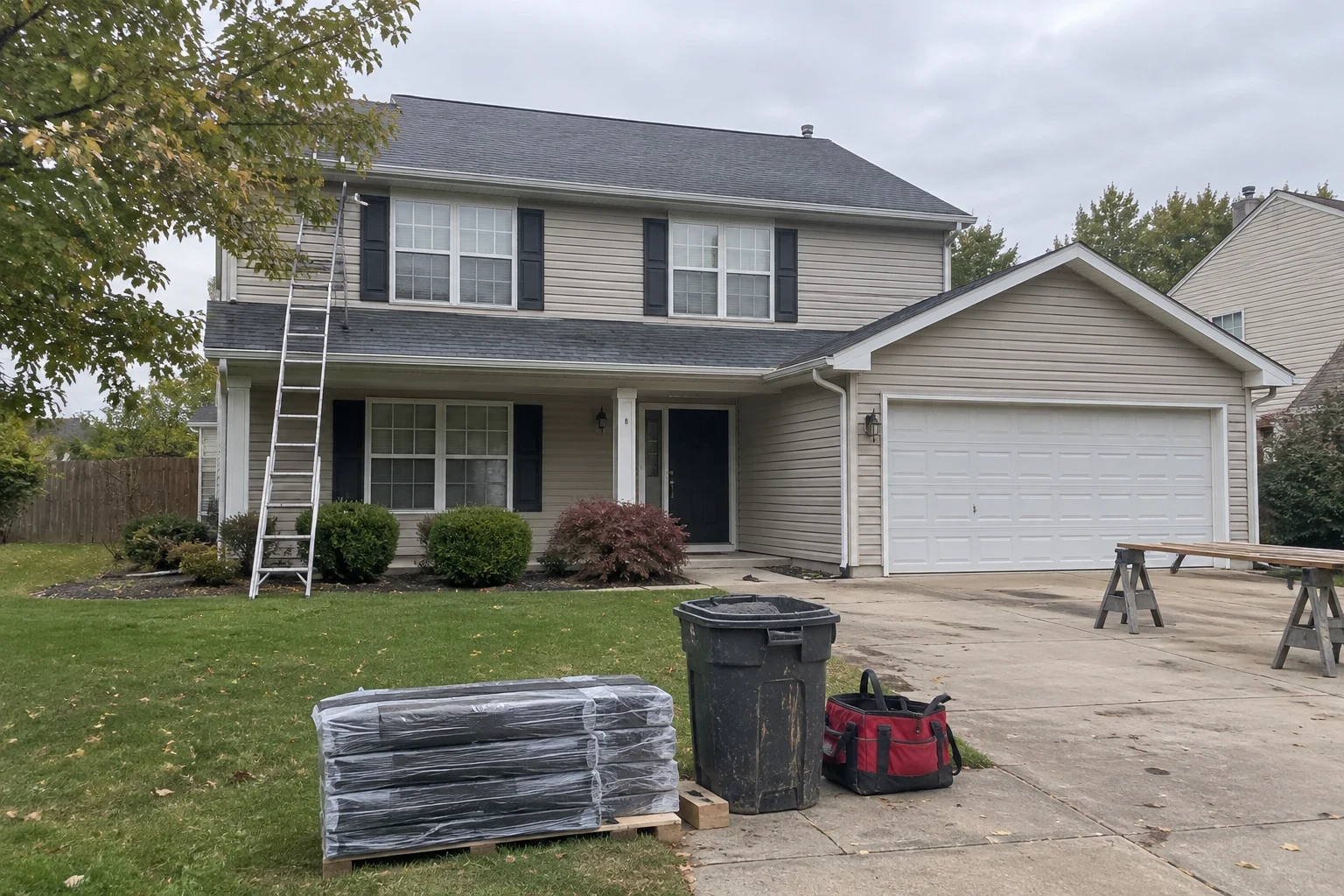
Find out what your shingles really need
We'll inspect your roof, show you the photos and hand you a written quote you can read at your own pace. No pressure and no surprise line items.